Horsewood 2026: What Buyers Should Check
Quick answer: what should Horsewood reviews actually check?
The Horsewood reviews worth trusting check five concrete things before they reach a verdict: whether ingredients sit at clinically studied doses, whether the product is third-party tested, whether the label is transparent instead of a proprietary blend, whether there is a real 60-day money-back guarantee, and whether the timeline is honest about results being gradual. Everything else is decoration. A legitimate store and a refund policy prove the company is accountable; they do not promise you a personal result.
- Check the panel: studied doses, named extracts, no hidden blend totals.
- Check the safeguards: third-party testing and a genuine 60-day guarantee.
- Check the timeline: gradual change over weeks to about three months, not overnight.

Search "Horsewood reviews" and you will find no shortage of opinions: glowing testimonials, breathless before-and-afters, and the occasional angry one-star post with no detail attached. What you will find far less of is a review that tells you how it reached its conclusion. That gap matters, because in the men's-vitality aisle the difference between a product worth your money and one worth avoiding almost never shows up in the star rating. It shows up on the label, in the testing, and in the fine print of the guarantee.
This guide is not a verdict handed down from on high. It is a checklist you can run yourself, on Horsewood or on any competing formula, so that the next set of Horsewood reviews you read, including this one, has to earn your trust rather than assume it. We will keep one honest boundary throughout: a well-built product and a solid refund policy are reasons to feel comfortable trying something, not a promise that it will change your life.
Horsewood reviews: what actually tells you something
Most reviews online are built from two ingredients, testimonials and enthusiasm, and neither survives contact with a hard question. A testimonial tells you what one anonymous person says happened to them. It cannot tell you whether the same thing will happen to you, whether it would have happened anyway, or whether the person exists. Enthusiasm, meanwhile, is free to manufacture and expensive to verify.
The information that actually predicts whether a supplement is worth buying is duller and far more useful. It is the per-ingredient dose. It is whether an independent laboratory has confirmed the contents match the label. It is whether you can get your money back if the product does nothing. None of that is exciting, which is precisely why weak reviews skip it and strong ones lead with it. When you read Horsewood reviews from here on, notice whether the writer ever looks at the panel. If they never mention a dose, they are reviewing the packaging.
The five checks every trustworthy Horsewood review should make
Here is the framework in full. Run all five and you will out-analyse ninety percent of what passes for a supplement review online.
1. Clinically studied doses, not just recognisable names
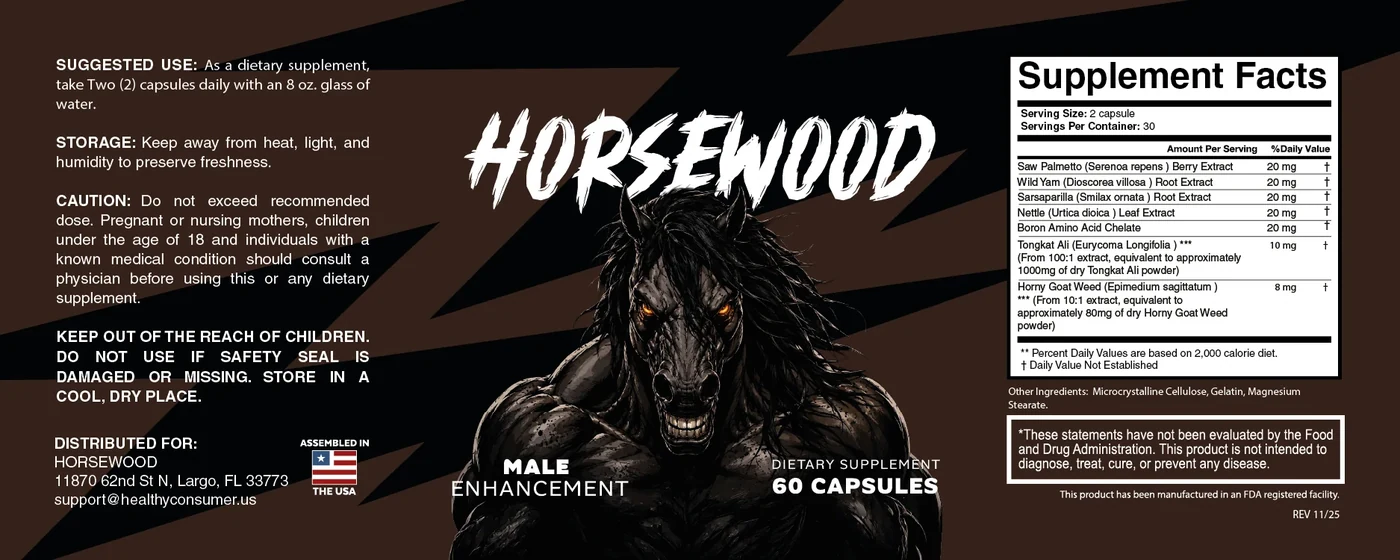
An ingredient list is a guest list, not a recipe. Seeing tongkat ali, ashwagandha or zinc on the label tells you the party was invited; it says nothing about whether they showed up in the amount that did something in a study. Human trials of these botanicals used specific doses, for example roughly 200 to 400 mg a day of a standardised tongkat ali extract, and a serving that delivers a fraction of that is trading on the name rather than the effect. A serious review reads each amount and asks a single question: does this match, or at least approach, the dose the research used? Our deep dive on the human evidence behind Horsewood's ingredients works through that comparison ingredient by ingredient.
2. Third-party testing seals you can actually verify
Supplements in the United States are not pre-approved by the FDA, which puts the burden of quality control on the manufacturer and, by extension, on you. Independent third-party testing, through programmes such as NSF, USP or an accredited contract lab issuing a certificate of analysis, is the single most reassuring thing a company can show. It confirms two things at once: that what is on the label is actually in the capsule, and that common contaminants such as heavy metals are within safe limits. A review that checks for a testing claim, and treats its absence as a real gap rather than a rounding error, is doing its job.
3. A transparent label, not a proprietary blend
A "proprietary blend" lists several ingredients and then gives you one combined milligram figure for the lot. It is legal, it is common, and for a buyer it is close to useless, because it lets a company front-load the cheap filler and sprinkle in a token amount of the expensive active while the label looks identical to a well-dosed product. Transparency is the opposite: every ingredient carries its own amount, so you can check each one against the research. When you compare Horsewood reviews, weight the ones that confirmed the label is fully transparent far above the ones that never opened it. Reading a panel is a skill, and our guide to vetting an over-the-counter male formula before buying walks through it line by line.
4. A real 60-day money-back guarantee
A genuine refund policy does two jobs. Practically, it caps your downside: if the product does nothing for you across a fair trial period, you are not stuck with the cost. Strategically, it signals confidence, because a company that expected mass dissatisfaction could not afford to offer sixty days of no-questions returns. The official Horsewood store lists a 60-day money-back guarantee, which is a reasonable window given that botanical effects are gradual. The caveat every honest review adds: read the current terms yourself on the order page, since the window and conditions are set by the seller and can change.
5. A realistic timeline
This is the check that separates marketing from information. Botanical ingredients do not work like caffeine. Where trials reported changes in hormones, mood or sexual wellbeing, those changes accrued over weeks, and often the fuller picture took closer to three months. Any review, or any product page, promising a transformation in days is either misinformed or dishonest. A trustworthy Horsewood review sets the expectation plainly: give it a consistent run, judge it against how you feel over that window, and use the guarantee if it does not deliver.
Run the checklist on the official page
The Supplement Facts panel, the current Horsewood price and the 60-day money-back terms are all on the official store, so you can verify every point above for yourself.
View Official PricingSeparating legit sales infrastructure from guaranteed results
This is the distinction that quietly decides most buying decisions, and almost nobody names it. There are two completely different questions hiding inside "is this any good?", and conflating them is how people end up either paralysed by suspicion or disappointed by hype.
The first question is: is the operation legitimate? That is about infrastructure. Does the store work, process payment securely and ship? Is there a reachable company behind it with a contact address and support hours? Is there a real, honoured refund policy? These are objective, checkable facts, and on these measures Horsewood presents like a legitimate operation rather than a fly-by-night listing.
The second question is entirely separate: will it work for me? That is about biology, and biology does not issue guarantees. Even ingredients with genuine trial support produced modest, individual results, clustered in the men who started with a deficit. A flawless store cannot change that, and a company behaving honestly will not pretend otherwise. When a review blurs these two, treating a working checkout as proof of efficacy, or treating one person's disappointing result as proof of a scam, it has stopped being useful. Keep them apart and the picture gets much clearer.
A legitimate store, a real guarantee and a transparent label tell you the company is accountable. They do not promise you a result. Any review that collapses those two ideas into one is selling something.
Is Horsewood a scam? Reading between the star ratings
"Scam" is a strong word that gets used loosely, so it is worth defining. A scam takes your money and delivers nothing, or something knowingly worthless, with no recourse. A product that is genuinely sold, ships as described, and comes with a working 60-day refund path does not fit that definition, whatever you think of its odds of working for you. That is the honest answer to the scam question, and it is why the label and the guarantee matter more than the loudest one-star post.
Extreme reviews at both ends deserve the most scepticism. Five-star raves with no specifics and one-star fury with no detail are the two easiest things to fake and the two least informative to read. The reviews that actually help sit in the unglamorous middle: the ones that mention the dose, describe a realistic timeline, note what did and did not change, and say whether the refund worked. Weight those. And remember that individual variation is real, so two honest, non-fabricated reviews can legitimately reach opposite conclusions about the same bottle. A grounded look at what the evidence says about whether Horsewood works will serve you better than any star average.
| What the review checks | Green flag | Red flag |
|---|---|---|
| Ingredient doses | Reviewer reads the panel and compares to studied amounts | Never mentions a milligram figure |
| Third-party testing | Notes an NSF/USP seal or certificate of analysis | Treats absence of testing as unimportant |
| Label transparency | Confirms per-ingredient amounts, flags proprietary blends | Praises a formula without opening the label |
| Guarantee | States the 60-day terms and where to verify them | Ignores refunds or invents a policy |
| Timeline | Frames results as gradual over weeks to ~3 months | Promises dramatic change in days |
| Tone | Weighs pros and cons, states limits | Pure hype or pure outrage, no detail |
Two objections worth answering honestly
"All these reviews are just affiliates." Some are, and that is worth knowing, which is why we disclose our own affiliate relationship openly in the footer. But an affiliate relationship does not automatically make a review wrong; it makes the reasoning worth checking. A disclosed affiliate who still reads the panel, states the limits and points you to the guarantee is more useful than an "independent" post that does none of those things. Judge the method, not just the motive.
"If it worked, it wouldn't need a guarantee." This gets it backwards. A guarantee is not a confession of weakness; it is a normal feature of confident direct-to-consumer selling and a legally meaningful commitment. What would be a red flag is the opposite: charging premium prices while offering no way to get your money back. A 60-day window is a reason to feel safer trying, precisely because results are individual and gradual rather than certain.
Frequently asked questions
Is Horsewood a legit product or a scam?
Horsewood is sold through a working official store with a stated 60-day money-back guarantee, which is the mark of legitimate sales infrastructure rather than a scam. That is a separate question from whether it will work for you. A functioning store, a real refund policy and a checkable label tell you the company is reachable and accountable; they do not promise an individual result, which for a botanical supplement is always gradual and varies from person to person.
What should I look for in a trustworthy Horsewood review?
A trustworthy review checks five concrete things: whether the ingredients appear at the doses used in human trials, whether the product is third-party tested, whether the label is transparent rather than a proprietary blend, whether there is a genuine money-back guarantee, and whether the timeline described is realistic. Reviews that promise dramatic overnight change, hide the label, or lean entirely on testimonials are selling excitement, not information.
Does Horsewood publish its full ingredient doses?
The only reliable place to confirm per-ingredient doses is the Supplement Facts panel on the official product page, so check it there rather than trusting a summary. A transparent label lists each botanical with its own milligram amount and, for standardised extracts, an extract ratio or marker percentage. If ingredients are grouped inside a single proprietary blend figure, you cannot confirm any one of them reaches the amount studied in the research.
Is there a money-back guarantee on Horsewood?
The official Horsewood store lists a 60-day money-back guarantee, which lets you try the product across a realistic window and request a refund if you are not satisfied. Always confirm the current terms, the return window and any conditions on the official order page before buying, because guarantee details are set by the seller and can change over time.
Check the official store
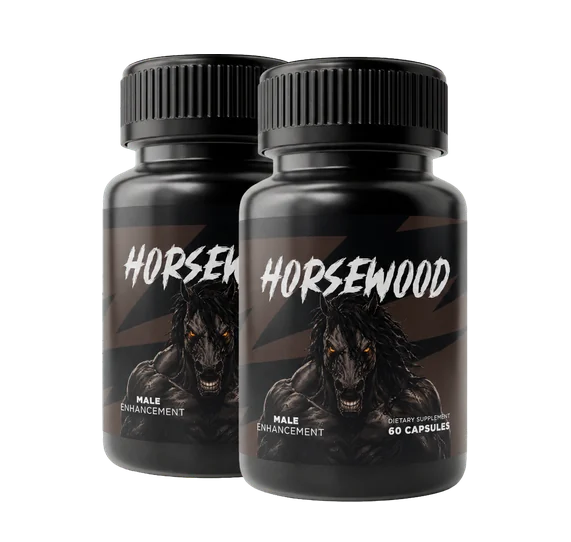
Verify the label, the package options and the 60-day money-back guarantee on the manufacturer's own page before you decide.
Order NowReferences
This article is general information, not medical advice. It describes how to evaluate reviews and product claims and does not assert any effect for any finished product. Speak to a qualified healthcare professional before starting any supplement, particularly if you take prescription medication or have a diagnosed condition.