Horsewood's Seven Botanicals: What the Human Research Actually Shows
Quick Answer: is there good evidence behind these seven ingredients?
It is uneven, and worth knowing which is which. Boron and tongkat ali have the most credible human data for anything testosterone-related. Saw palmetto is genuinely well studied — but the largest trials found it no better than placebo for the thing it is usually sold for. Horny goat weed has an interesting laboratory mechanism and almost no human evidence at supplement doses. Wild yam and sarsaparilla rest on a biochemical claim that does not survive contact with human metabolism.
- Best supported: boron, then tongkat ali.
- Well studied, mostly negative: saw palmetto.
- Mechanism without human data: horny goat weed, nettle.
- The deciding factor: dose — and a blend total will not tell you it.
Why "clinically studied" rarely means what it sounds like
Almost every supplement in this category describes its ingredients as clinically studied. The phrase is usually accurate and almost always less meaningful than it appears, for three reasons.
First, a study on an ingredient is not a study on the product. Horsewood, like nearly every formula of its type, has no published trial on the finished blend. What exists is research on individual extracts, often at doses that a seven-ingredient capsule cannot physically contain.
Second, the dose used in research is frequently far higher than what ends up in a blend. A trial might use 400 mg of a standardised extract; a capsule sharing space with six other ingredients may hold a fraction of that. The ingredient is present. The evidence does not necessarily travel with it.
Third, much of what is cited is in vitro or animal work. Cells in a dish and rodents metabolise compounds very differently from a human liver. This is the gap where most supplement marketing lives.
Ingredient by ingredient
Tongkat ali (Eurycoma longifolia)
The most defensible ingredient in the formula. Human trials, several of them randomised and placebo-controlled, have looked at standardised tongkat ali extract for testosterone, libido and stress markers. Results are modest but repeatedly positive, and the clearest effects show up in men who started with low testosterone rather than in men already in normal range — a pattern worth keeping in mind before expecting much.
Typical study doses run 200–400 mg per day of a standardised extract over four to twelve weeks. There is also reasonable data on reduced cortisol and improved mood under stress, which may explain part of the subjective effect people report.
Boron
The quiet one, and arguably the best supported. Small human studies have found that supplemental boron — around 10 mg daily for roughly a week — can raise free testosterone and lower sex hormone-binding globulin, the protein that keeps testosterone bound and unavailable. The studies are small, but they are human, controlled, and they measure a hard endpoint rather than a questionnaire.
Boron is also cheap and effective at low milligram doses, which means it is one of the few ingredients here that a blend can realistically deliver at a studied amount.
Saw palmetto
Genuinely well researched — and this is where an honest review has to part company with the marketing. Saw palmetto has been tested in large, well-designed trials for lower urinary tract symptoms associated with benign prostatic hyperplasia. The biggest of them, including the STEP and CAMUS trials, found it performed no better than placebo, even at escalating doses.
It is also not a testosterone booster. The mechanism usually cited — inhibition of 5-alpha-reductase, the enzyme converting testosterone to DHT — would, if anything, alter the balance between the two rather than raise total testosterone. Its presence in a vitality formula is conventional rather than evidence-led.
Horny goat weed (Epimedium)
Interesting mechanism, thin human evidence. Its principal compound, icariin, is a weak PDE5 inhibitor in laboratory assays — the same broad enzyme family targeted by prescription ED drugs. That fact is repeated constantly in marketing, and it is true in a test tube.
The gap is size. Icariin's potency in those assays is orders of magnitude below the pharmaceutical compounds, and the amount present in a botanical extract at supplement doses is small. Human trials of epimedium for erectile function are essentially absent. This is a mechanism in search of evidence, not evidence of an effect.
Nettle
Worth reading the label carefully here, because nettle root and nettle leaf are different materials with different research. The prostate and SHBG-binding work — itself largely in vitro — concerns the root. Leaf is more commonly studied for other purposes entirely. A formula listing nettle leaf is not carrying the research that gets cited for nettle root.
Wild yam and sarsaparilla
These two share a claim that deserves to be retired. Wild yam contains diosgenin, and sarsaparilla contains plant sterols and saponins; both are described as natural precursors the body converts into hormones. Diosgenin is used as a starting material for steroid hormones — in a laboratory, through a multi-step chemical synthesis. The human body does not perform that conversion. Eating diosgenin does not produce DHEA, progesterone or testosterone.
There is no meaningful human evidence that either ingredient raises testosterone or improves sexual function. They have a long traditional history, which is the honest way to describe them, and that is how the manufacturer describes them too.
The dose problem
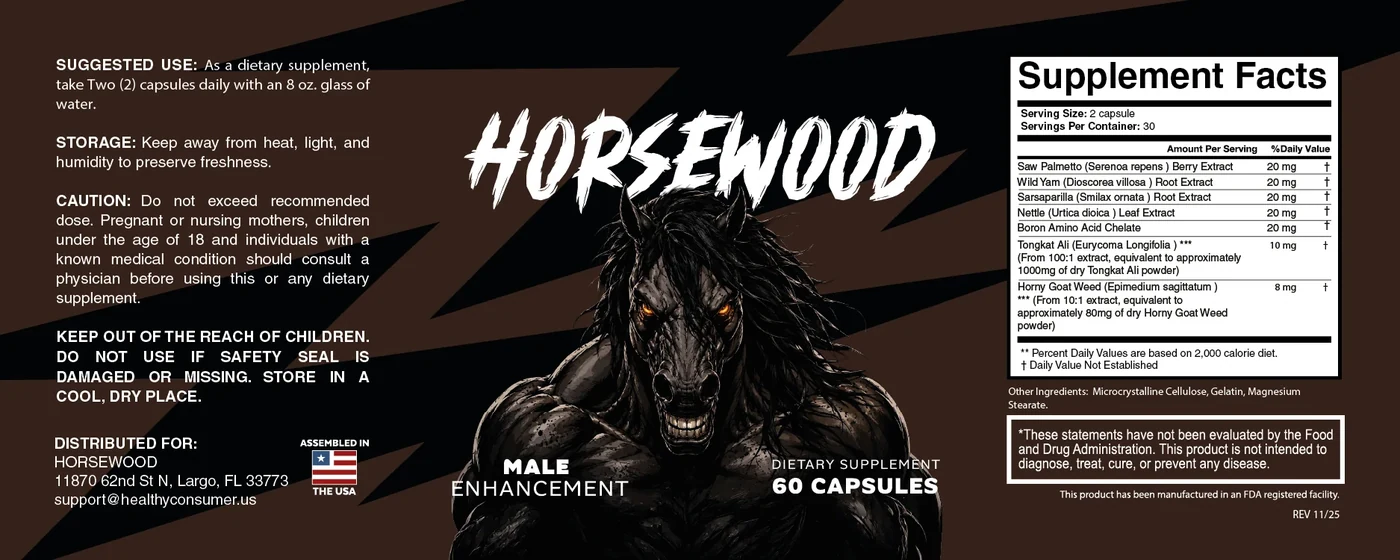
Everything above is academic if the amounts are too small, and this is where most formulas become impossible to evaluate. If a Supplement Facts panel lists a single "proprietary blend" total — say 1,200 mg across seven ingredients — you cannot tell whether the tongkat ali is 300 mg or 30 mg. Both are legal. Only one resembles the research.
The arithmetic is unforgiving. Seven ingredients at studied doses would not fit in two capsules. Something has to be present at a token amount, and a blend total conceals which. This is not unique to Horsewood; it describes most of the category. It is simply the first thing to check on any label, including this one.
What a reasonable expectation looks like
If the boron is dosed near the studied amount and the tongkat ali extract is standardised and meaningful, a small shift in free testosterone over several weeks is plausible — more so if you are starting from a low baseline. That is the realistic ceiling on the evidence, and it is a long way from the language this category tends to use.
What would not be reasonable is expecting it to work like a medication, or to fix erectile dysfunction. ED is frequently an early symptom of cardiovascular or metabolic disease, and treating it with a botanical supplement risks ignoring something that a doctor should be looking at. That is worth more than any formula on the market.
Bottom line
Two ingredients with real human support, one well studied and largely negative, two with mechanisms that have never been demonstrated in people, and two resting on a conversion the body does not perform. That is a fairly typical profile for the category — better than some, and not the "clinically proven" picture the marketing implies.
If you buy it, buy it from the official store where the 60-day guarantee applies, give it the 60 days, and judge it on what actually changes.
Frequently asked questions
Which Horsewood ingredients have the best human evidence?
Boron and tongkat ali have the most credible human data. Small controlled trials suggest boron near 10 mg daily can raise free testosterone and lower sex hormone-binding globulin, while standardised tongkat ali at 200 to 400 mg has shown modest, repeatable effects, mainly in men who started with low testosterone. Both are the exceptions rather than the rule across the seven botanicals.
Is saw palmetto a testosterone booster?
No. Saw palmetto is well studied, but the largest trials found it no better than placebo for the urinary symptoms it is usually sold for. Its cited mechanism, inhibiting 5-alpha-reductase, would shift the balance between testosterone and DHT rather than raise total testosterone. Its presence in a vitality formula is conventional rather than evidence-led.
Do wild yam and sarsaparilla raise testosterone?
There is no meaningful human evidence that they do. Wild yam contains diosgenin, which is used to make steroid hormones in a laboratory through multi-step synthesis, but the human body does not perform that conversion. Eating diosgenin does not produce testosterone or DHEA. Both ingredients have a traditional history, which is the honest way to describe them.
Why does the proprietary blend make the doses hard to judge?
A single blend total, such as 1,200 mg across seven ingredients, hides how much of each is present. The tongkat ali could be 300 mg or 30 mg, and both are legal, but only one resembles the research. Seven ingredients at their studied doses would not fit in two capsules, so something is present in a token amount that the blend total conceals.
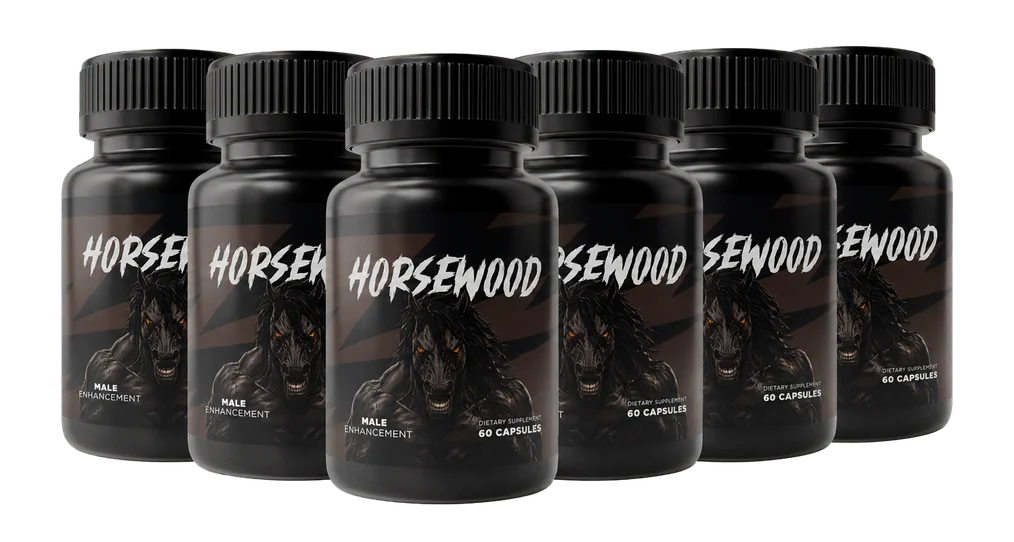
Check the current official price
Package pricing, the bonuses, and the 60-day money-back guarantee.
Order NowThis article is general information, not medical advice. It describes published research on individual ingredients and does not claim any effect for the finished product. Speak to a qualified healthcare professional before starting any supplement, particularly if you take prescription medication.