Ashwagandha, Testosterone and Libido: How Cortisol Sits in the Middle
Quick answer: how are ashwagandha, cortisol and libido connected?
Ashwagandha does not act as a direct testosterone booster. Its most reliable, best-documented effect is lowering an elevated cortisol level, and because chronic stress hormones suppress both desire and testosterone, easing that pressure is the plausible route to a better libido. Effects build over weeks, not hours, and show up most in stressed, tired men.
- Mechanism: lower excess cortisol, remove a brake on desire and testosterone.
- Studied dose: around 300 mg standardised root extract, twice daily.
- Timeline: two to eight weeks of consistent daily use.

Ask most men what is dulling their sex drive and they will point at testosterone. Ask a good doctor and the first questions are often about sleep, workload and stress. That gap is exactly where the conversation about ashwagandha, testosterone and libido gets interesting, because the herb's most reliable effect is not on your hormones directly but on the stress signal sitting on top of them. Cortisol, the body's main stress hormone, quietly suppresses desire, and ashwagandha is one of the few botanicals with human trials suggesting it can bring an elevated cortisol level back down.
That is a less dramatic story than "natural testosterone booster", and it is a more accurate one. This article walks through the stress–cortisol–libido link, what the randomised trials actually measured, why ashwagandha has earned a place in serious men's formulas, and the honest limits of what a capsule of root extract can and cannot do. If you already know the herb only from a hundred identical sales pages, this is the version with the caveats left in.
The stress–cortisol–libido link, in plain terms
Sexual desire is generated in the brain, not the groin. It runs on a balance of signalling chemicals — dopamine drives wanting, while stress and threat chemistry does the opposite. Cortisol is the headline hormone of that stress system. In short bursts it is useful and entirely normal; it wakes you in the morning and helps you respond to a deadline. The problem is chronic elevation: months of poor sleep, relentless work pressure, over-training or financial strain keep cortisol running higher than it should, and the body reads that as "this is not the time to reproduce".
There are two ways that dampens libido. The first is central and fast: a stressed brain simply generates less desire, which is why the most passionate week of a holiday rarely happens on day one. The second is hormonal and slower. Cortisol and testosterone are made from overlapping raw materials and broadly pull in opposite directions, so a body running on high stress chemistry tends to sit lower on the testosterone side of the ledger. Neither of these makes stress a "disease" of libido — it is ordinary physiology — but it does explain why so many men with perfectly normal bloodwork still feel flat.
This is the exact spot an adaptogen is meant to occupy. Adaptogens are plants proposed to blunt the body's stress response, and ashwagandha (Withania somnifera) is the most studied of them. The claim is not that it adds anything, but that it takes something away: the excess cortisol load. Remove the brake, and whatever desire and hormone capacity was being suppressed has more room to show up.
What the ashwagandha testosterone libido research actually measured
Marketing tends to collapse a shelf of separate studies into one triumphant sentence, so it is worth separating what was actually tested. The evidence for ashwagandha in men clusters around three outcomes: stress and cortisol, testosterone readings, and self-reported sexual function.
On stress and cortisol, the data is the strongest. Multiple randomised, placebo-controlled trials in chronically stressed adults have reported meaningful drops in serum cortisol — often in the range of a fifth to a quarter — alongside lower scores on standard stress and anxiety questionnaires after around eight weeks. This is the herb doing the one thing it is most consistently shown to do.
On sexual desire, the number people cite is real and worth stating carefully. A randomised, placebo-controlled trial using 300 mg of a standardised root extract taken twice daily reported that men's sexual-desire scores rose roughly 61.9% over eight weeks, well above the placebo group. That is a genuine, published result. It is also a questionnaire outcome in one trial, measuring how men rated their own desire, which is exactly the right target for a libido claim but is not the same as a hard clinical endpoint. Treat it as encouraging and specific, not as a guarantee for every man.
On testosterone itself, several small trials have found higher readings after 8 to 16 weeks, particularly in stressed, overweight or low-baseline men and in some resistance-training studies. The effect sizes are modest and the mechanism most people land on is indirect: less cortisol, more room for testosterone, rather than the herb forcing production upward. If you want the wider context on how hormone-support ingredients differ from desire ingredients, our breakdown of testosterone support versus libido support lays out why those are two different shelves that get sold as one.
Why ashwagandha shows up in serious male formulas
Look past the loud "test booster" branding and you will notice that the more credible men's blends nearly all carry ashwagandha, and they carry it for a reason that fits the biology above. A lot of the male-vitality category is built on ingredients that target hormones or blood flow directly. Ashwagandha is the one that addresses the upstream problem — the stress load that is quietly working against everything else.
It also has two practical advantages that matter on a real Supplement Facts panel. First, the studied dose is small enough to physically fit. A standardised extract at 300 to 600 mg is achievable in a capsule in a way that, say, the multi-gram doses of nitric-oxide precursors are not. Second, it is one of the few ingredients in the category whose flagship human trials used the same kind of standardised extract you can actually buy, rather than a laboratory isolate or an animal-only model. That is not true of every botanical in these blends, and our honest review of the human evidence behind Horsewood's botanicals is candid about which ingredients carry their research and which do not.
None of this makes ashwagandha a hero ingredient that rescues a weak formula. It makes it a sensible inclusion, dosed at a plausible level, aimed at a genuine contributor to low libido that most products ignore entirely. In a category full of ingredients chosen for how they sound on a label, that is a comparatively grown-up choice.
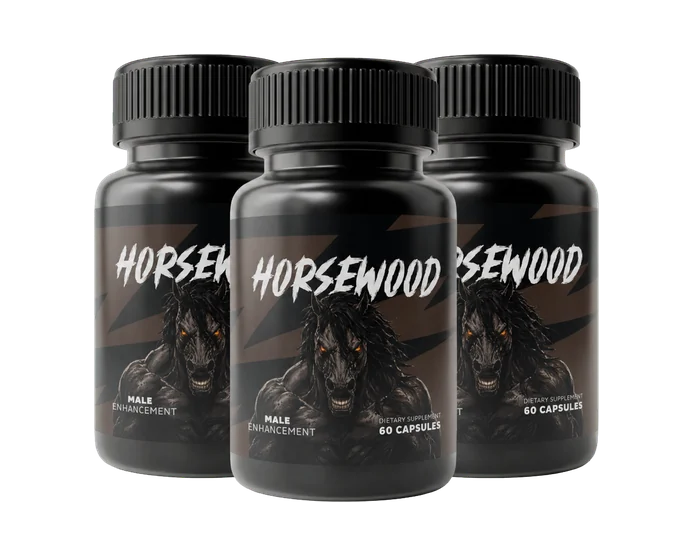
See how Horsewood doses its stress-and-vitality botanicals
The official store lists the full panel, the package options and the 60-day money-back guarantee — the fastest way to check the ashwagandha amount for yourself.
View Official PricingThree myths worth clearing up
The herb is genuinely useful, which is precisely why it gets oversold. Three claims deserve a firm correction before you buy anything.
Myth one: "ashwagandha spikes your testosterone"
The verb is wrong. Nothing in the human data looks like a spike. What the better trials show is a gradual, modest rise in measured testosterone over two to four months, concentrated in men who were stressed or starting from a low or borderline baseline. If your testosterone and stress levels are already healthy, the honest expectation is little measurable change. A supplement that corrects a stress-driven suppression is doing something real; it is not adding hormones you did not have.
Myth two: "lowering cortisol is always good, so more is better"
Cortisol is not a villain to be eliminated. You need it — it is part of waking up, handling stress and regulating metabolism. The benefit of ashwagandha is bringing an elevated level back toward normal, not driving a normal level into the floor. This is also why the men who feel the most from it are the visibly stressed, under-slept ones, and why a calm, well-rested man may notice very little. Taking more will not manufacture a benefit that your physiology does not need.
Myth three: "it works like an ED tablet"
It does not, and it should not be sold as if it does. Ashwagandha is a slow adaptogen working on the stress axis, not a fast vascular drug working on blood flow. If erection quality specifically is the problem, that is a circulation-and-cardiovascular question that belongs with a doctor first, because erectile difficulty can be an early warning sign of something more important than a flat libido. No botanical, ashwagandha included, is a substitute for that assessment.
The realistic pitch for ashwagandha is not "raise your testosterone". It is "if chronic stress is quietly suppressing your desire and your hormones, this is one of the few ingredients with human trials suggesting it can ease that pressure — over weeks, in stressed men, at a specific dose."
The studied dose, and why a blend total hides it
The protocols that produced the headline results are fairly consistent: a standardised root extract at roughly 300 mg twice daily, or 500 to 600 mg once daily, taken for at least eight weeks. Two details decide whether a product actually delivers that. The first is the milligram amount. The second, and the one marketing skips, is standardisation — the extract used in trials is concentrated to a defined level of the active withanolides, and a cheaper, weaker material at the same milligram number is not the same ingredient.
This is where a proprietary blend becomes a problem. If a label lists a single combined total across six or seven ingredients, you cannot tell whether the ashwagandha inside is at a research-shaped 600 mg or a token 50 mg riding on the strength of the name. Both are legal. Only one resembles the studies. The single most useful habit when comparing men's formulas is to look for the ashwagandha amount and its standardisation stated individually, and to be sceptical when they are hidden inside a blend.
How long it actually takes
Set the timeline expectation before you spend anything, because impatience is what makes people quit two weeks early and conclude it "did nothing". Adaptogenic effects accumulate; they do not switch on. Most cortisol and stress trials ran a full eight weeks, the sexual-desire result above was measured at eight weeks, and several testosterone studies ran twelve to sixteen. A fair minimum is two to eight weeks of consistent daily use, taken with food, before you judge anything.
That slow build is also your best fraud detector. Anything marketed as producing a same-day surge in drive or hormones is describing a mechanism ashwagandha does not have — and in this category, "works within an hour" has repeatedly turned out to mean an undeclared pharmaceutical. If you want the wider expectation-setting picture for a whole formula rather than a single ingredient, we walk through a realistic Horsewood results timeline that applies the same logic to the finished product.
The honest limits
A few boundaries stated plainly, because the herb is worth taking seriously enough to describe accurately.
It is not a treatment. Ashwagandha is a supplement studied for stress, cortisol and self-reported desire in general populations. It is not a therapy for diagnosed low testosterone or erectile dysfunction, and it should never be used to postpone getting those assessed.
It is not for everyone. Because it acts on the thyroid and stress systems, people with thyroid conditions, autoimmune disease, or those on sedatives or thyroid medication should clear it with a doctor first, and it is not appropriate in pregnancy. It can also cause drowsiness or stomach upset in some people.
Its effect depends on your starting point. The men who respond are usually the stressed and low-baseline ones. Correcting a stress-driven suppression is real; conjuring a benefit where there was no deficit is not something any adaptogen does.
Where a blend like Horsewood fits
Horsewood is a daily multi-botanical capsule aimed at men's vitality, and ashwagandha's role inside a formula like it is the stress-axis one described throughout this article rather than a standalone testosterone lever. That is a reasonable job for it to do, and it pairs logically with the hormone-leaning and prostate-leaning ingredients that make up the rest of that style of blend. What no product in the category can honestly claim is a trial on the finished formula — the evidence discussed here is about the single ingredient at a single studied dose, and combining several botanicals does not combine several bodies of proof.
So the smart move is the same one it always is: check the panel, not the promises. Find the ashwagandha amount and its standardisation, confirm they are stated rather than buried in a blend, give it the full eight weeks, and buy from a source where a money-back guarantee lets you judge it on what actually changes rather than on what the sales page hoped you would feel.
Frequently asked questions
How does ashwagandha affect testosterone?
The effect is indirect and modest. Several small placebo-controlled trials in men have reported higher testosterone readings after 8 to 16 weeks of standardised root extract, and the most likely mechanism is a reduction in elevated cortisol, which competes with testosterone under chronic stress. The clearest changes appear in stressed, tired or low-baseline men rather than in men who are already rested and in normal range.
Can lowering cortisol improve libido?
It can help when the problem is stress-driven. Chronically high cortisol suppresses the brain circuits that generate sexual desire and works against testosterone. Bringing an elevated cortisol level back toward normal removes that brake, which is a plausible reason ashwagandha trials have reported improved sexual-desire scores. It does nothing extra if your cortisol was never the issue.
What ashwagandha dose is studied?
The most cited protocols use a standardised root extract at roughly 300 mg taken twice daily, or 500 to 600 mg once daily. One randomised, placebo-controlled trial using 300 mg of root extract twice daily reported sexual-desire scores rising about 61.9 percent over eight weeks. The extract standardisation matters as much as the milligram number, so a blend total on a label does not tell you whether the studied amount is present.
How long until ashwagandha works?
Adaptogenic effects build gradually and typically need two to eight weeks of consistent daily use. Most cortisol and stress trials ran eight weeks, and hormone trials often ran longer. Nothing about ashwagandha is fast-acting, so any product promising a same-day result is describing something other than the herb itself.
Check the current official price
Package pricing, the bonus guides and the 60-day money-back guarantee, on the manufacturer's own page.
Order NowReferences
- NIH National Center for Complementary and Integrative Health — Ashwagandha overview and safety
- PubMed — randomised controlled trials of ashwagandha on cortisol and stress
- PubMed — Withania somnifera and testosterone in men
- Mayo Clinic — Male hypogonadism: symptoms and causes
- NIDDK (NIH) — Erectile dysfunction: definition and facts
This article is general information, not medical advice. It describes published research on a single ingredient and does not claim any effect for any finished product. Speak to a qualified healthcare professional before starting any supplement, particularly if you take prescription medication, have a thyroid or autoimmune condition, or have a diagnosed condition.